Why We Rebranded: The Meaning Behind Women Grow the Farm
For more than two decades, Women Managing the Farm served women in agriculture with practical education, trusted expertise, and meaningful connections. The name reflected the need it was created to address: women who had inherited land or stepped into decision-making roles and needed support navigating financial, legal, and operational responsibilities.
Over time, something shifted. Not the mission. Not the commitment. But the language.
The name no longer captured the full scope of who was in the room.
Women Grow the Farm is not a reinvention. It is a clarification. It reflects how women participate in agriculture today and how they have always participated—whether or not that participation was formally named.
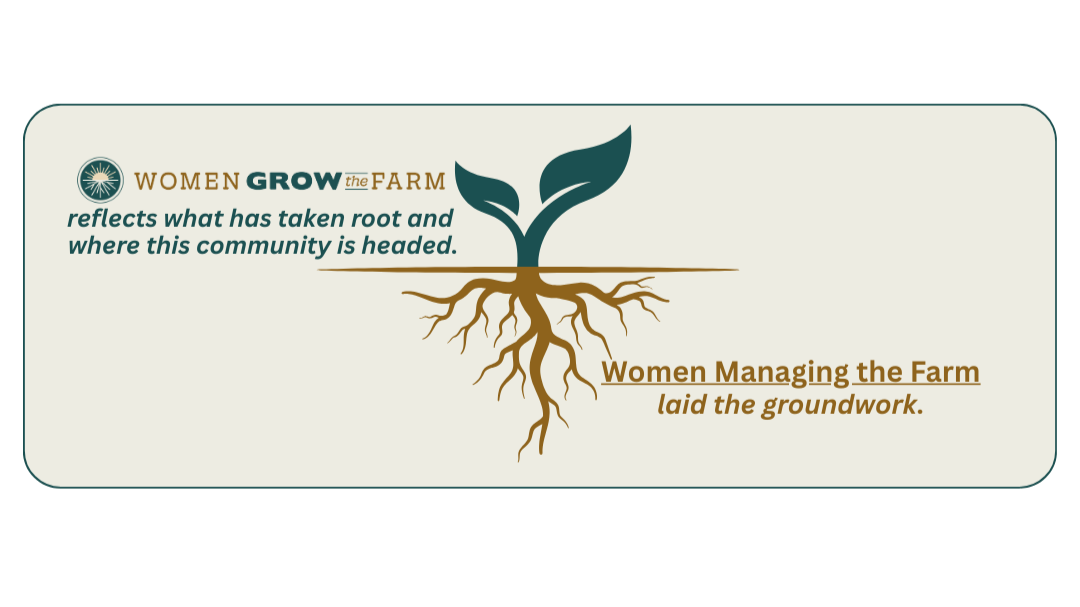
The Weight of a Word
Language carries assumptions. In agriculture, certain words signal authority. Others signal support roles. For many women, the word “manage” has always carried weight.
Historically, women have managed farms in every meaningful sense of the word. Census data shows that women have long been listed as farm operators, particularly in periods of transition such as war, widowhood, or generational transfer. Women have overseen finances, negotiated leases, made conservation decisions, and directed labor. Yet culturally, many hesitated to claim that title publicly.
In Kansas and across the United States, women now make up a significant share of agricultural landowners. According to USDA data, women own or co-own roughly half of U.S. farmland. Many of these women are primary decision-makers or deeply involved in financial and operational strategy. They are not adjacent to agriculture. They are embedded within it.
And yet, for some, the word “manage” still suggests a narrow lane—often financial oversight after inheritance rather than active leadership across seasons of agricultural life.
When leadership language feels narrow, participation narrows with it.
That reality became clear over years of listening.
Agriculture Has Changed. So Has Participation.
Women in agriculture today represent a wide range of roles:
On-farm operators
Absentee landowners
Agribusiness professionals
Conservation planners
Direct-to-consumer entrepreneurs
Agricultural lenders and advisors
Successors preparing for generational transfer
Kansas State University Extension programs and agricultural education enrollment trends reflect growing participation of women across agricultural disciplines. Women are earning agricultural degrees in higher numbers than in previous generations. They are serving on commodity boards, managing farm finances, shaping conservation policy, and building rural enterprises.
What once fit a specific need—education for women suddenly responsible for inherited farms—expanded into something broader.
The conference rooms reflected that expansion. The conversations widened. Women attended who were not “newly managing” a farm but were actively operating, investing, mentoring, and leading.
The name needed to reflect that evolution.
Why “Grow” Matters
Agriculture is rooted in growth. Crops grow. Herds grow. Markets expand and contract. Land transitions. Knowledge compounds over time.
But growth in agriculture is not limited to production.
Women in agriculture grow leadership capacity. They grow confidence through education. They grow operational understanding. They grow relationships that shape long-term decisions.
The word “grow” carries less hierarchy and more momentum. It reflects a process rather than a title.
Some women hesitate to call themselves managers, even when they are making management-level decisions daily. Fewer hesitate to say they are growing—learning, stewarding, investing, expanding their role.
“Grow” also captures multiple seasons of involvement. A woman may begin as a landowner seeking clarity on lease structures. Later, she may step into succession planning. Later still, she may mentor younger operators or expand into conservation programs or agribusiness ventures.
Growth accommodates movement. It allows for evolution.
Women Grow the Farm reflects that flexibility.
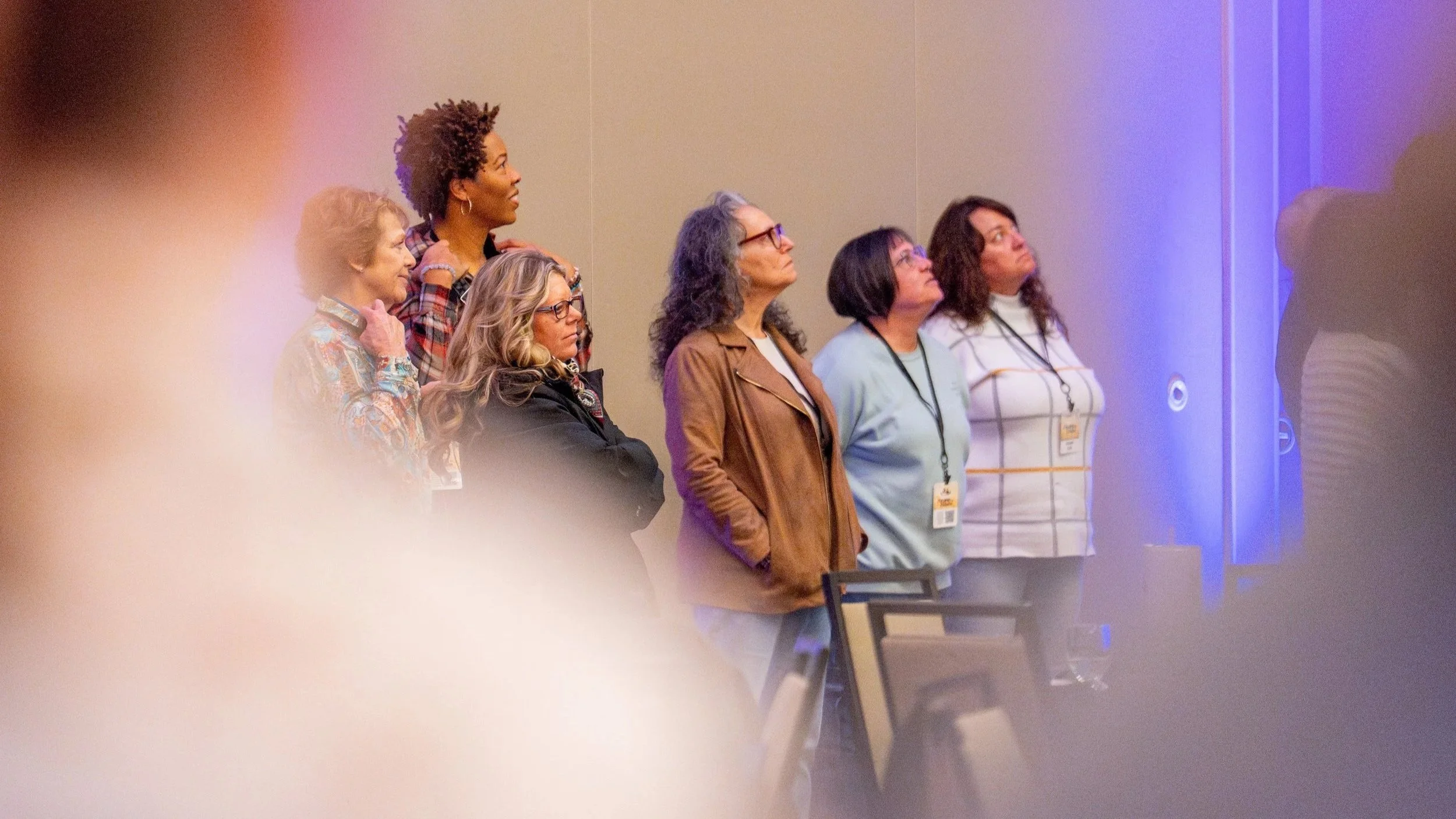
A Broader Reflection of Women in Agriculture
This shift in language is not about abandoning the past. It is about naming the present accurately.
For generations, women in agriculture have contributed in ways that were essential but not always formally recognized. They balanced household finances during volatile commodity cycles. They preserved family stability during drought and economic downturns. During the farm crisis of the 1980s, many women stepped into financial negotiations and operational restructuring as farms faced foreclosure and debt pressure.
Their leadership did not begin recently. It often became more visible during disruption.
Today’s agricultural landscape presents a different set of complexities: regulatory shifts, land consolidation, global markets, conservation compliance, technology integration, and generational transfer at scale. Women are navigating those realities alongside men, sometimes as partners, sometimes as primary decision-makers, sometimes independently.
The name Women Grow the Farm reflects that women’s leadership is not situational or temporary. It is ongoing.
It includes:
Women who farm full time
Women who manage land from a distance
Women whose off-farm careers support agricultural operations
Women preparing to inherit land
Women investing in rural enterprises
Women entering agriculture professionally
Agriculture does not look like it did twenty years ago. Neither does participation.
The name needed to match that breadth.
Honoring the Foundation
Women Grow the Farm exists because of the decades invested under the name Women Managing the Farm. The foundation built by volunteers, Extension professionals, agricultural leaders, and attendees remains intact.
The mission remains centered on practical education, credible resources, and peer connection. Women still gather to learn about farm transition, financial management, conservation planning, lease structures, legal considerations, and leadership development.
The difference is that the name now reflects the full arc of involvement, not only the entry point.
It signals that whether a woman is inheriting, operating, advising, investing, or preparing for succession, she belongs in the conversation.
Looking Forward
Rebranding is often interpreted as change for the sake of change. In this case, it was the opposite.
The shift to Women Grow the Farm emerged from careful reflection: Does the name describe who we serve today? Does it create space for the next generation of women in agriculture? Does it reflect the way women describe their own participation?
Language shapes who sees themselves in an organization.
Women Grow the Farm affirms that women in agriculture are not confined to a single role or season. They are part of the long-term resilience of the industry. They contribute across operational, financial, environmental, and community dimensions.
Agriculture has always depended on women’s work, judgment, and stewardship. The updated name acknowledges that dependence clearly.
The work continues. The education continues. The conversations continue.
Now the name reflects the full scope of what has been happening all along.
Women Grow the Farm.